By Ethan Donahey • April 2026
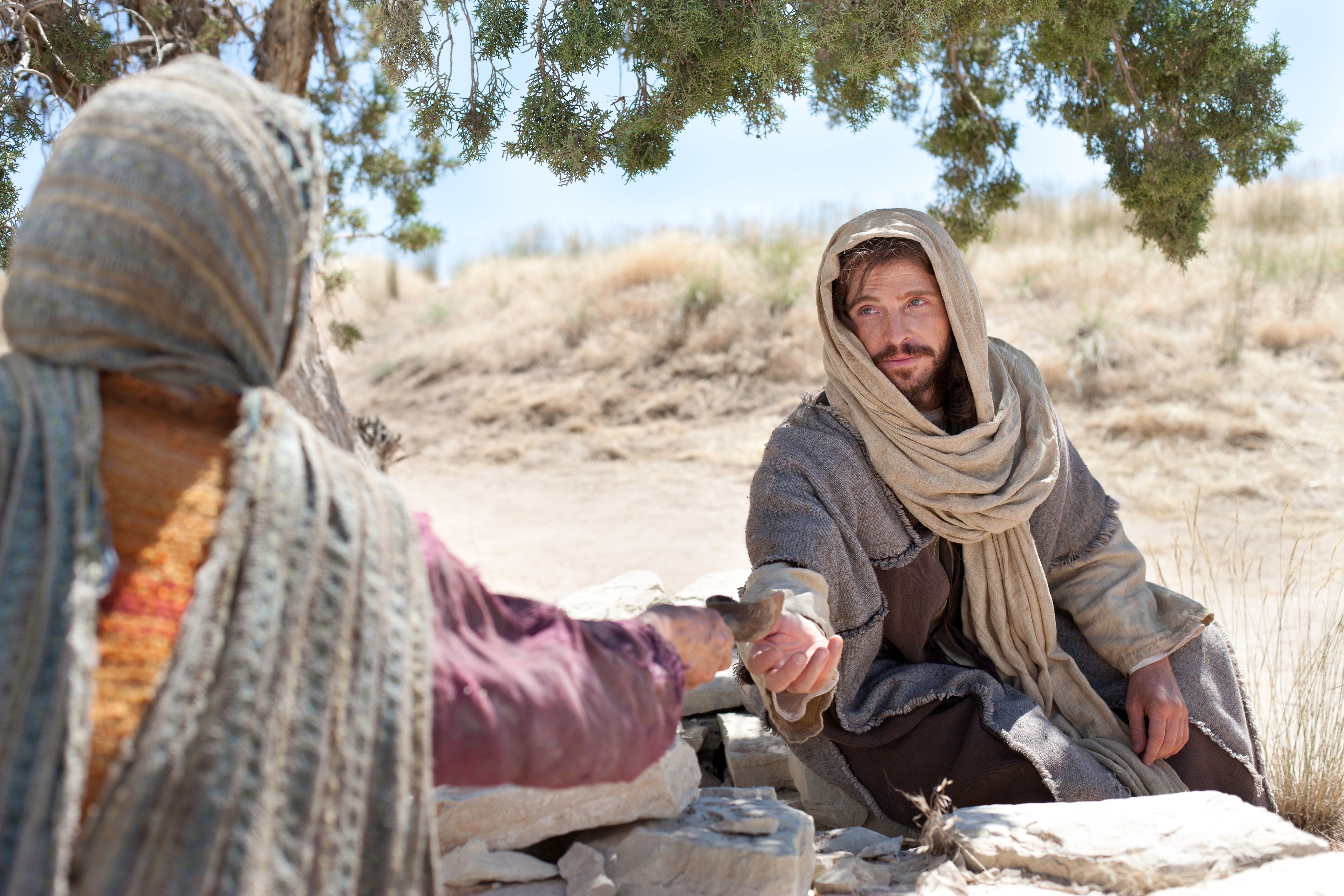
For a long time, a certain aspect of my worship has intrigued me. As a member of The Church of Latter-Day Saints, every Sabbath day I participate in a ceremony called the sacrament, where in remembrance of the sacrifice and triumph of Jesus Christ, bread and water are blessed and distributed to those in attendance. The prayers on the bread and water are separate. Here they are:
O God, the Eternal Father, we ask thee in the name of thy Son, Jesus Christ, to bless and sanctify this bread to the souls of all those who partake of it, that they may eat in remembrance of the body of thy Son, and witness unto thee, O God, the Eternal Father, that they are willing to take upon them the name of thy Son, and always remember him and keep his commandments which he has given them; that they may always have his Spirit to be with them. Amen.
O God, the Eternal Father, we ask thee in the name of thy Son, Jesus Christ, to bless and sanctify this water to the souls of all those who drink of it, that they may do it in remembrance of the blood of thy Son, which was shed for them; that they may witness unto thee, O God, the Eternal Father, that they do always remember him, that they may have his Spirit to be with them. Amen.
In both of these prayers, the phrase “always remember him” is present. In the blessing on the bread, those participating in the ceremony promise that they are willing to always remember Jesus Christ, and in the blessing on the water, those participating promise that they actually do always remember Jesus Christ. This promise was strange to me, because as a fallible human, I am not in a constant state of remembrance of my Savior. I know that my fellow worshippers are similarly afflicted by fallible mortality, and thus cannot truly witness that they always remember Christ. Clearly, I was misunderstanding this phrase. To better understand this commitment, I looked for what the leaders of our church have said about this.
First, what does “remember’ actually mean here? According to Elder Ulisses S. Soares, an apostle of The Church of Jesus Christ of Latter-Day Saints,
“The word remember comes from the Latin word memor and means “to be mindful of,” and re- means “again.” In this context, the word remember means to have in or to be able to bring to one’s mind an awareness of someone or something that one has seen, known, or experienced in the past.9 There is a strong correlation between the emotion felt and the resulting memory. Thus, the stronger the emotion, the more vivid and influential is the memory. In the Hebrew context, the word remember involves a knowledge that is accompanied by appropriate action. Thus, “doing” is an essential part of the remembering.”
We cannot remember that which we have not experienced. It makes sense then, that in order to fulfill this covenant to always remember our Savior, we must experience him throughout the week. As I sit in church, I find my mind wanders to whatever media I consumed the previous week. In this case, how much more meaningful will my worship become if more of the media I consume is centered on Christ? As Gordon Lindsay says, “with the instruction to ‘always remember Him,’ the Lord does not want some form of general, always-sort-of-in-the-back-of-the-mind kind of remembering. God the Father expects that we frequently have full mental attention and specific thoughts of His Son.”
Moreover, when we talk about remembering Christ, what do we mean? Here is an extensive list from Elder Claudio R.M. Costa, another leader in my faith:
These last few passages have answered the “what” of remembering, but they still leave me somewhat in the dark as to how. Although I now know what to remember and what to do in order to remember more, my question of imperfection still remains. I know that I will still fall short and not completely fulfill this promise. My first answer to this dilemma comes as a reassurance from a speech given by Elder Henry B. Eyring, a senior leader. He declares that “whether or not you choose to keep your covenant to always remember Him, He always remembers you.” This is a reassurance because it is comforting to know that the God of all things loves me and remembers me, even when I falter.
However, my final answer came from another quotation from the same speech by Elder Claudio Costa: “Furthermore, meditating on the sacrament prayers and the very special and meaningful words of the prayers reminds me how wonderful it is to receive the promise, during the blessing of the sacrament, that as we always remember Him, we will always have His Spirit with us.” Somehow, in my hyperfixation on my side of the promise, I had forgotten the promised blessing of the Holy Spirit. Always remembering Christ means that we will always have the blessing of his presence in the form of the Holy Ghost. This is a natural relationship that seems linear; when we remember Christ in our thoughts and actions, we will have his presence with us. In this sense, the promise in the blessing of the water is not a hypocritical promise from us to God, but instead a promise from God that this relationship will continue to hold true as we keep trying to draw nearer to him.